

Quick Facts Box
| Category | Details |
|---|---|
| Platform | Amazon Prime Video |
| Seasons | 2 (2019 & 2023) – 18 episodes total |
| Creators | Travis Beacham, René Echevarria |
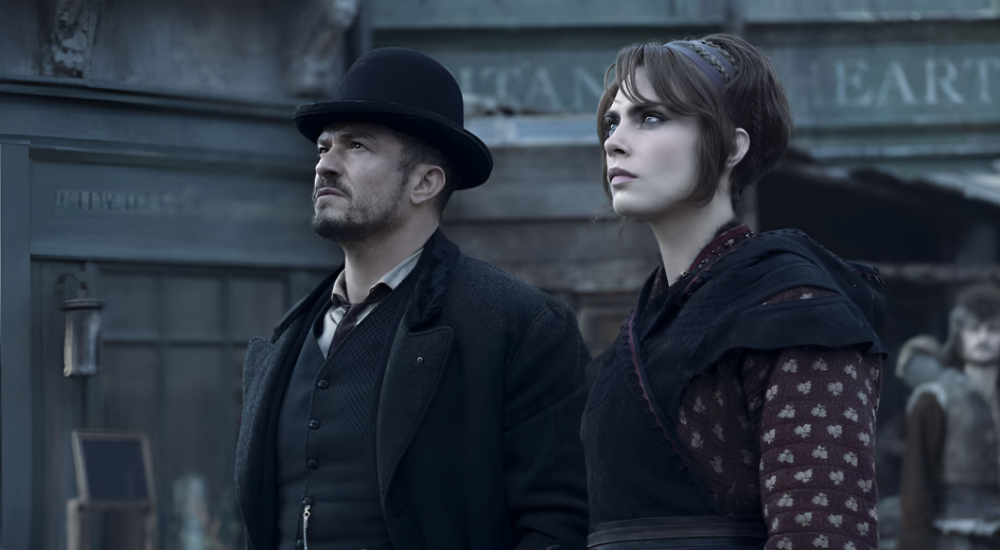
| Main Cast | Orlando Bloom (Philo), Cara Delevingne (Vignette), David Gyasi, Indira Varma, Karla Crome |
| Rotten Tomatoes | Season 1: 56% critics / ~85% audience; Season 2: 41% critics — Full scores |
| IMDb Rating | ~7.8–8.1 — IMDb Page |
| Genre | Dark Fantasy, Neo-Noir Crime, Political Drama |
| Setting | The Burgue – steampunk Victorian city with fae refugees |
| Status (2026) | Canceled after Season 2; available on Prime Video |
| Key Themes | Immigration, racism, class warfare, identity |

World-Building Mastery: Crafting the Carnival Row Universe
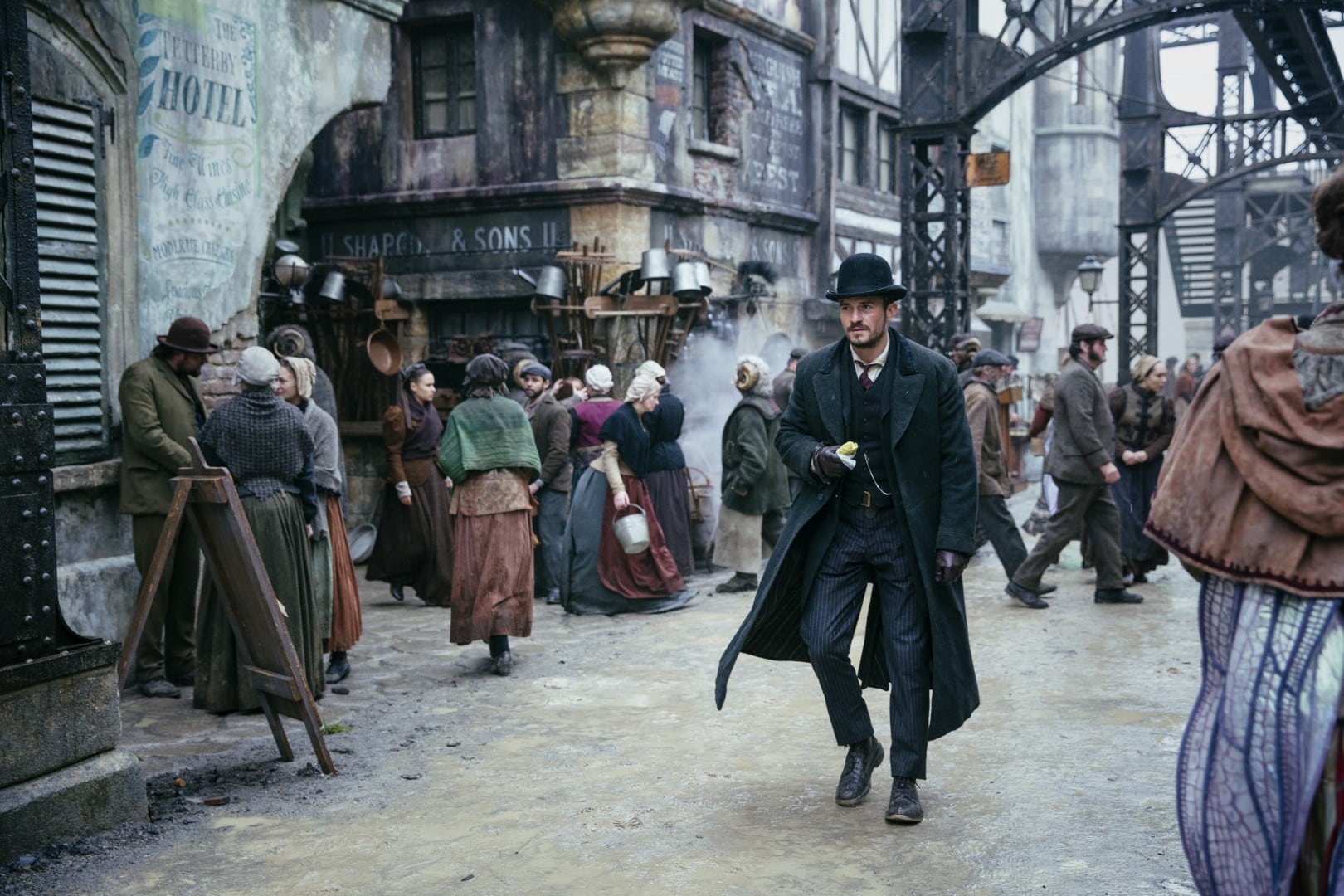
Few series have constructed a fantasy world with Carnival Row’s tactile detail. The Burgue feels lived-in: cobblestone streets slick with rain, gas lamps flickering against winged fae silhouettes, and the gritty underbelly of Carnival Row itself—a refugee district pulsing with fauns, pixies, and other “critch.” Production designer François Audouy and the Prague-based crew crafted an immersive Victorian-steampunk aesthetic that blends opulent human estates with the squalor of the Row. Learn more about the Prague filming. Mythology feels ancient yet politically charged: the fae’s homeland ravaged by human empires mirrors real-world refugee crises. This depth rewards patient viewers but can overwhelm those expecting lighter escapism.
Plot Architecture: Mystery, Intrigue, and Narrative Layers
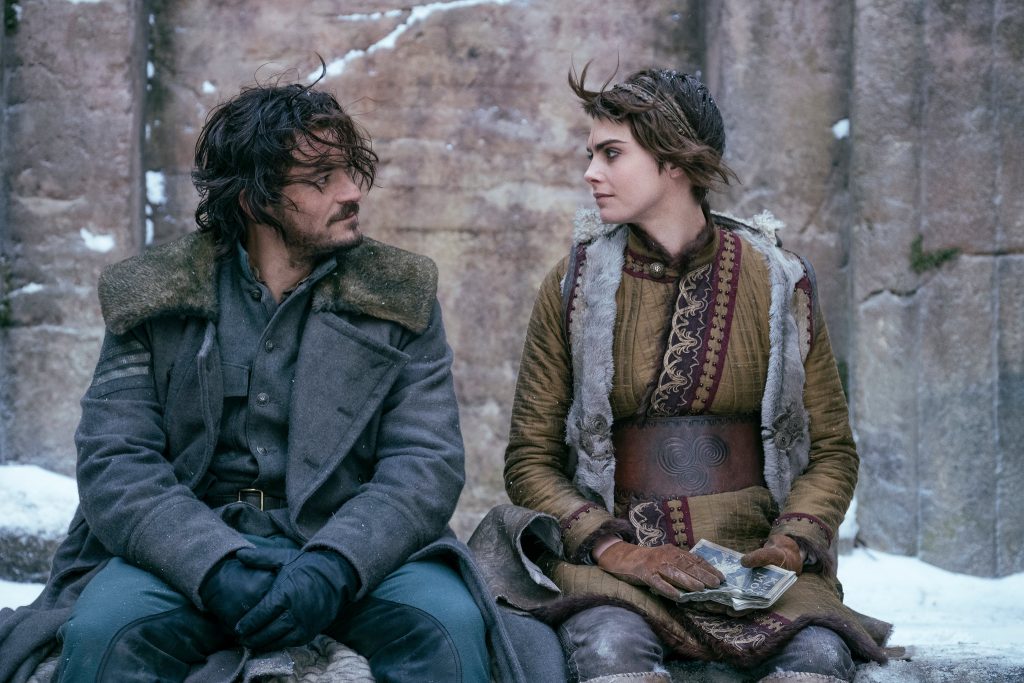
The series layers a central murder mystery (a string of gruesome killings linked to a monstrous entity) with sprawling political machinations, a star-crossed romance between human detective Rycroft “Philo” Philostrate and faerie Vignette Stonemoss, and multiple subplots involving Parliament intrigue, underground resistance, and personal secrets. Season 1 methodically introduces factions and conspiracies; Season 2 accelerates into open rebellion. While ambitious, the sheer volume of threads—assassinations, coups, identity reveals, and betrayals—sometimes dilutes momentum, leaving some arcs feeling rushed or underexplored by the finale. Watch the official Season 1 trailer.
Ensemble Performances: Strengths and Shortcomings in Casting
Bloom brings weary gravitas to Philo, a man hiding his own fae heritage, while Delevingne’s Vignette radiates fierce independence and vulnerability. Supporting players shine brightest: Indira Varma’s cunning politician, David Gyasi’s conflicted leader, and Karla Crome’s complex turn add texture. However, some critics noted wooden chemistry between the leads and uneven accents that occasionally pulled viewers out of the world. The ensemble’s strength lies in conveying systemic oppression through subtle glances and quiet defiance rather than bombastic monologues. See cast details and character profiles.
Thematic Layers: Society, Class, and Political Allegory
Carnival Row wears its allegory proudly. The fae’s plight echoes immigrant struggles, colonial exploitation, and rising fascism—complete with anti-critch rallies, restrictive laws, and dehumanizing rhetoric. Class divides within human society and among the fae themselves add nuance: not all “critch” are united, and human elites exploit divisions for power. The series probes identity (Philo’s hidden heritage), consent, and the cost of assimilation versus resistance. These layers give the show intellectual weight, though some felt the messaging grew heavy-handed in Season 2. Wikipedia overview of themes and production.
Pacing and Structure: Where the Series Excelled or Faltered
Season 1 excels at atmospheric world immersion and slow-burn mystery, allowing relationships and political tensions to simmer. Yet its deliberate tempo frustrated viewers expecting faster payoffs. Season 2 tightens the focus on revolution but occasionally rushes resolutions, cramming multiple climaxes into fewer episodes. The dual-timeline elements and frequent cross-cutting between plots create a mosaic effect—effective for scope but taxing for casual viewers. Overall, the structure rewards binge-watching more than weekly release.
Audience Metrics: Viewership Numbers and Review Aggregates
Initial viewership was solid: the series held Prime’s U.S. Top 10 for weeks and performed strongly in key international markets like the Czech Republic (filming location). Audience scores remained robust (~85% on Rotten Tomatoes), with fans praising the ambition and rewatch value. However, global numbers reportedly fell short of Amazon’s blockbuster expectations, especially after the long COVID-induced hiatus between seasons. IMDb user ratings hover around 7.8–8.1, reflecting a dedicated but not massive fanbase.
Critical Consensus: Praise, Criticism, and Polarized Opinions
Critics split sharply. Praise centered on production values, thematic ambition, and visual poetry—“a feast for the eyes,” per some outlets. Detractors called it “style over substance,” citing convoluted plotting, sluggish pacing, and dialogue that occasionally veered into melodrama. The 57% Season 1 and 41% Season 2 Tomatometer scores underscore this divide: reviewers admired the craft but found the narrative execution uneven. Audience scores, by contrast, stayed high, highlighting a classic “critics vs. viewers” gap common in genre television.
Production Scale: Budget, Design, and Technical Execution
As one of Prime’s early big-budget fantasy ventures, Carnival Row featured elaborate practical sets, intricate costumes, and seamless VFX for wings, magic, and creatures. Filmed primarily in Prague, the production achieved a cinematic scale rare for streaming at the time. However, COVID disruptions caused lengthy delays, inflating costs and forcing contract renegotiations. The technical polish remains a standout—atmospheric lighting, detailed creature work, and sweeping establishing shots elevate even weaker episodes. Behind-the-scenes production insights.
Genre Fusion: Blending Fantasy, Crime, and Drama Elements
The series masterfully merges dark fantasy with neo-noir detective procedural and political drama. Philo’s investigation unfolds like a Victorian True Detective, while fae politics evoke Game of Thrones-style scheming. Romantic tragedy and body-horror elements add further texture. This hybrid approach creates a unique flavor—more grounded and cynical than high fantasy peers—yet risks alienating fans of any single genre expecting purer escapism or tighter mystery resolution.
Cancellation Factors: Reasons Behind the Two-Season Run
Amazon canceled Carnival Row after Season 2 without a formal explanation, but contributing factors are clear. Skyrocketing production costs (elaborate world-building, VFX, and a large cast), combined with pandemic-related delays that stretched the gap between seasons to nearly four years, eroded momentum. Viewership, while respectable, apparently failed to justify the expense for Amazon’s data-driven model. Cast and crew contracts lapsed during extended post-production, making renewal logistically challenging. The decision left some story threads resolved but others open, frustrating loyal fans. Official Season 2 announcement.
2026 Streaming Context: Availability and Viewer Discovery
In 2026, Carnival Row remains streamable on Prime Video, benefiting from the platform’s vast library and algorithmic recommendations. New viewers discover it through “fantasy” or “steampunk” categories, often surprised by its complete two-season arc—a rarity in an era of endless renewals. Its themes of displacement and authoritarianism feel freshly relevant, sparking renewed online discussion. While not a breakout hit like The Boys or The Rings of Power, it maintains a cult following among those who appreciate its singular vision. Watch both seasons on Prime Video.
Comparative Analysis: How It Stacks Against Peers in Fantasy TV
Compared to The Witcher or House of the Dragon, Carnival Row offers denser political allegory and less bombastic action, favoring atmosphere over spectacle. It shares tonal DNA with Penny Dreadful’s gothic horror-romance but grounds its fantasy in sharper social commentary. Versus His Dark Materials or Shadow and Bone, it feels more adult and cynical, with fewer heroic quests and more systemic critique. Its cancellation after a conclusive (if imperfect) Season 2 positions it as a cautionary tale: ambitious world-building can captivate, but without tighter narrative control or broader mainstream appeal, even visually stunning series struggle to sustain long runs in a crowded market.
Ultimately, Carnival Row divided audiences because it refused easy categorization. It is neither pure popcorn fantasy nor prestige drama, but a hybrid that demands investment in its intricate world and moral gray areas. For viewers willing to embrace its deliberate pace and thematic heft, it delivers a haunting, visually arresting experience that lingers long after the final episode. For others, its ambitions outpace its execution. In an industry obsessed with endless expansion, the series’ willingness to conclude its story on its own terms—flaws and all—may yet prove its most enduring virtue.
